
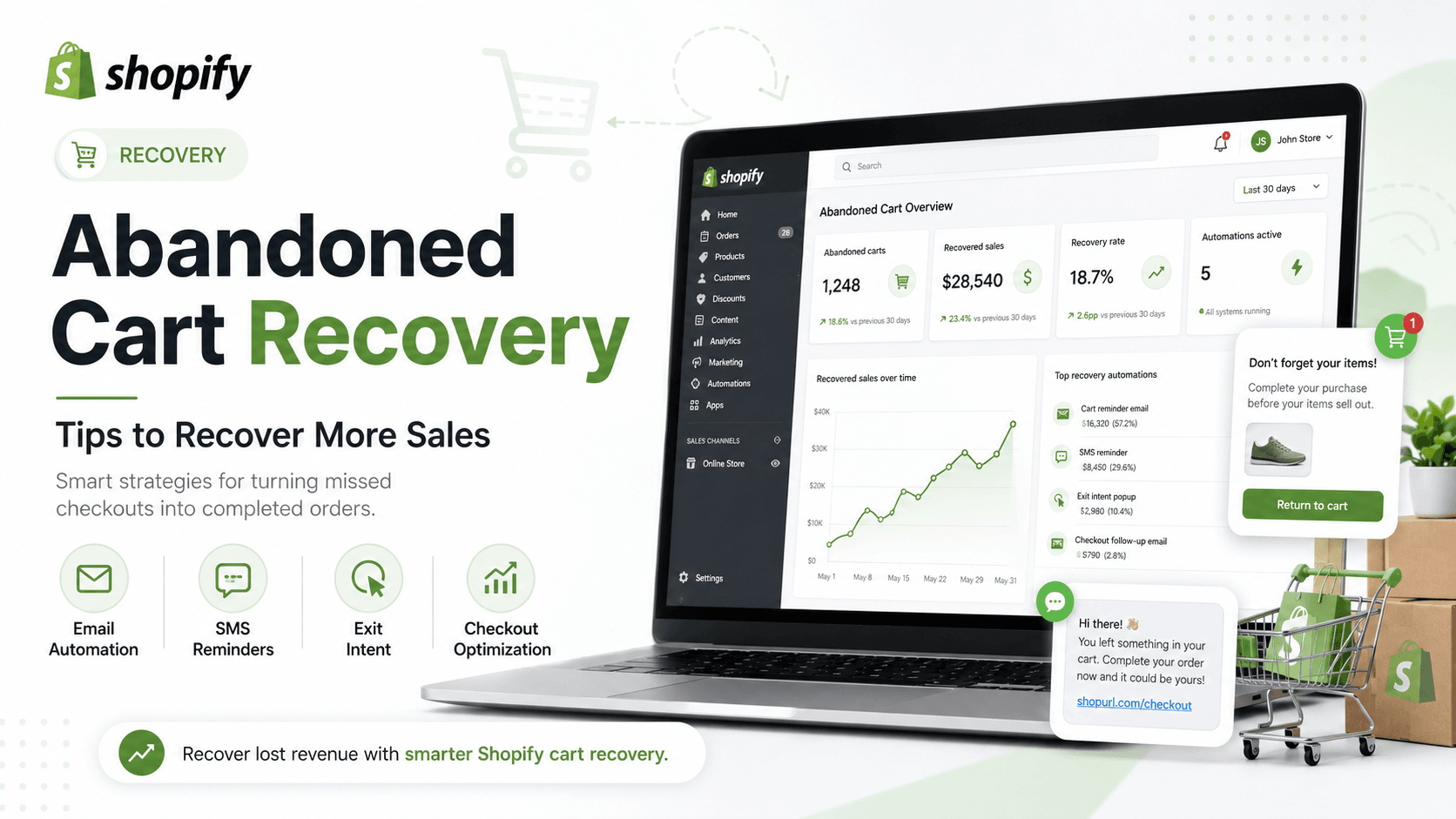
Abandoned carts are normal in ecommerce. What matters is how quickly and clearly you bring shoppers back without sounding desperate. In 2026, recovery still works best when store UX, offer strategy, and message timing support each other.
1. Fix checkout friction before adding more emails
If shipping costs surprise buyers, or mobile checkout feels clumsy, recovery emails will underperform. Improve the path first. Review payment options, address form friction, and delivery estimates on the same devices your customers use.
2. Send the first reminder while intent is high
A simple reminder with product image, price, and a direct return link often works better than an instant discount. Many shoppers leave to compare or get interrupted. A clear reminder can reopen the decision without training them to wait for coupons.
3. Use a short sequence, not an endless drip
A common structure is reminder, value reinforcement, then a final incentive. Too many messages train people to ignore you. Protect brand trust by keeping the sequence focused and easy to unsubscribe from.
4. Match the offer to the reason for drop-off
Free shipping thresholds, bundle savings, or low-stock urgency can outperform generic discounts if used carefully. Not every abandoned cart needs 10% off. Over-discounting trains buyers to abandon on purpose.
5. Add SMS only when consent and timing are right
SMS can recover high-intent carts fast, but overuse damages trust. Keep messages short and useful. Combine SMS with email thoughtfully rather than sending identical pressure on every channel.
6. Track recovery rate and revenue, not open rate alone
Measure how many carts return to purchase. Optimize subject lines, creative, and offers against recovered revenue. Opens without purchases can hide weak landing experiences or poor offer fit.
7. Keep product availability honest in recovery messages
If an item sells out, do not send a cart email that leads to disappointment. Sync inventory awareness into flows where possible, or offer a relevant alternative quickly.
8. Align on-site UX with recovery messaging
If your email promises easy checkout, the cart and checkout must feel easy. Inconsistent messaging reduces trust and recovery rate. Treat abandoned cart strategy as part of store optimization, not only email marketing.
XLOXI helps Shopify brands combine store UX improvements with recovery flows so abandoned cart strategy supports real sales growth throughout 2026.
Build a recovery stack that respects the brand
Recovery messaging should sound like your store, not like a generic discount robot. Use product imagery, clear delivery expectations, and helpful answers to common hesitations such as sizing, materials, or returns. When customers feel helped rather than pressured, recovery rates improve and unsubscribe rates stay healthier.
Coordinate email, SMS, and on-site remarketing so the customer does not receive conflicting offers. Keep an eye on margin: recovering a cart with a deep discount can still be a loss after ads and shipping. In 2026, mature ecommerce teams treat abandoned cart recovery as a profit system, not only a revenue vanity metric.
Review flows quarterly. Creative fatigue is real, and product catalogues change. Fresh creative and updated best sellers often restore performance without increasing discount depth.