
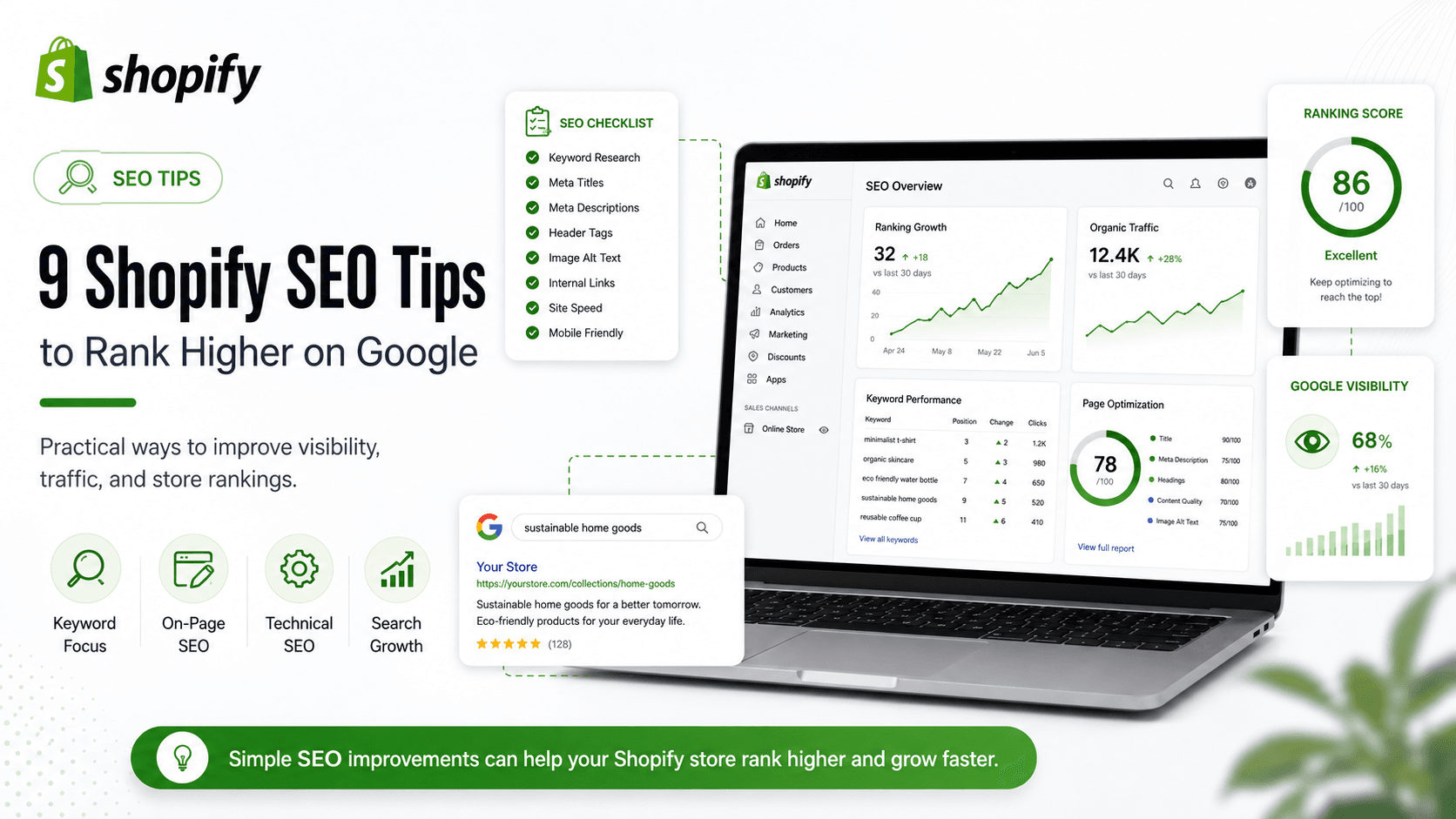
Shopify can rank well on Google when store structure, content, and technical foundations work together. In 2026, ecommerce SEO still rewards clear page intent, strong internal linking, useful content, and pages that perform well on mobile. These Shopify SEO tips focus on ranking improvements you can operationalize — not vague advice.
1. Target one primary keyword per key page
Give each important collection and product page a clear primary keyword. Avoid making every page compete for the same phrase. When multiple URLs target identical intent, rankings often stall and analytics become harder to interpret.
2. Treat collection pages as ranking assets
Category searches often convert better than blog traffic. Add unique collection copy, useful FAQs, and strong internal links to priority collections. Thin default collection pages rarely win competitive commercial queries.
3. Improve product titles and meta descriptions
Write titles for humans first, with the search phrase included naturally. Meta descriptions should earn the click with clarity and relevance. Consistent title patterns across a catalogue also make bulk optimization easier as you scale.
4. Build internal links with intent
Link from blogs to products, from products to collections, and between related collections. Internal links help Google understand your strongest pages and help shoppers discover alternatives without relying only on search filters.
5. Fix indexation and duplicate content issues
Watch Search Console for soft 404s, duplicate titles, and filtered URLs that waste crawl budget. Clean indexing supports stable rankings. Faceted navigation and variant URLs deserve special attention on Shopify catalogues.
6. Strengthen page experience signals
Mobile usability, image optimization, and faster templates support ranking stability. SEO and speed should be planned together so content improvements are not undermined by slow product pages.
7. Use content to support commercial pages
Publish guides that answer buyer questions, then link them to the products and collections you want to rank. Content should feed revenue pages instead of living as an isolated blog with no commercial pathway.
8. Optimize images with useful alt text
Describe the product accurately. Good alt text helps accessibility and can support image search visibility. Avoid stuffing every alt attribute with the same keyword.
9. Track rankings against business keywords
Monitor the keywords that drive revenue, not vanity terms. Adjust titles, links, and content based on what is moving in Search Console. A simple priority keyword list tied to collections and hero products keeps SEO focused.
Putting the tips into a monthly SEO rhythm
Each month, review impressions and average position for your top commercial queries, fix indexation issues, improve one cluster of collection or product pages, and publish or refresh supporting content. This steady rhythm usually outperforms irregular big rewrites.
If you want Shopify SEO work tied to real ranking goals, XLOXI can audit your store and implement the technical and on-page changes that matter for visibility in 2026.
Common Shopify SEO mistakes to avoid
Do not rely on an SEO app alone to rewrite every title overnight. Avoid identical collection descriptions copied across dozens of categories. Do not publish blogs that never link to products. And do not ignore Search Console coverage issues while producing more content. Ranking growth in 2026 usually comes from cleaner structure plus useful pages, not from tools that promise automation without strategy.
Also avoid chasing vanity keywords with no purchase intent. If a phrase never leads to collection views or product interest, it may not deserve your limited content capacity. Keep SEO tied to revenue pages and buyer journeys.