
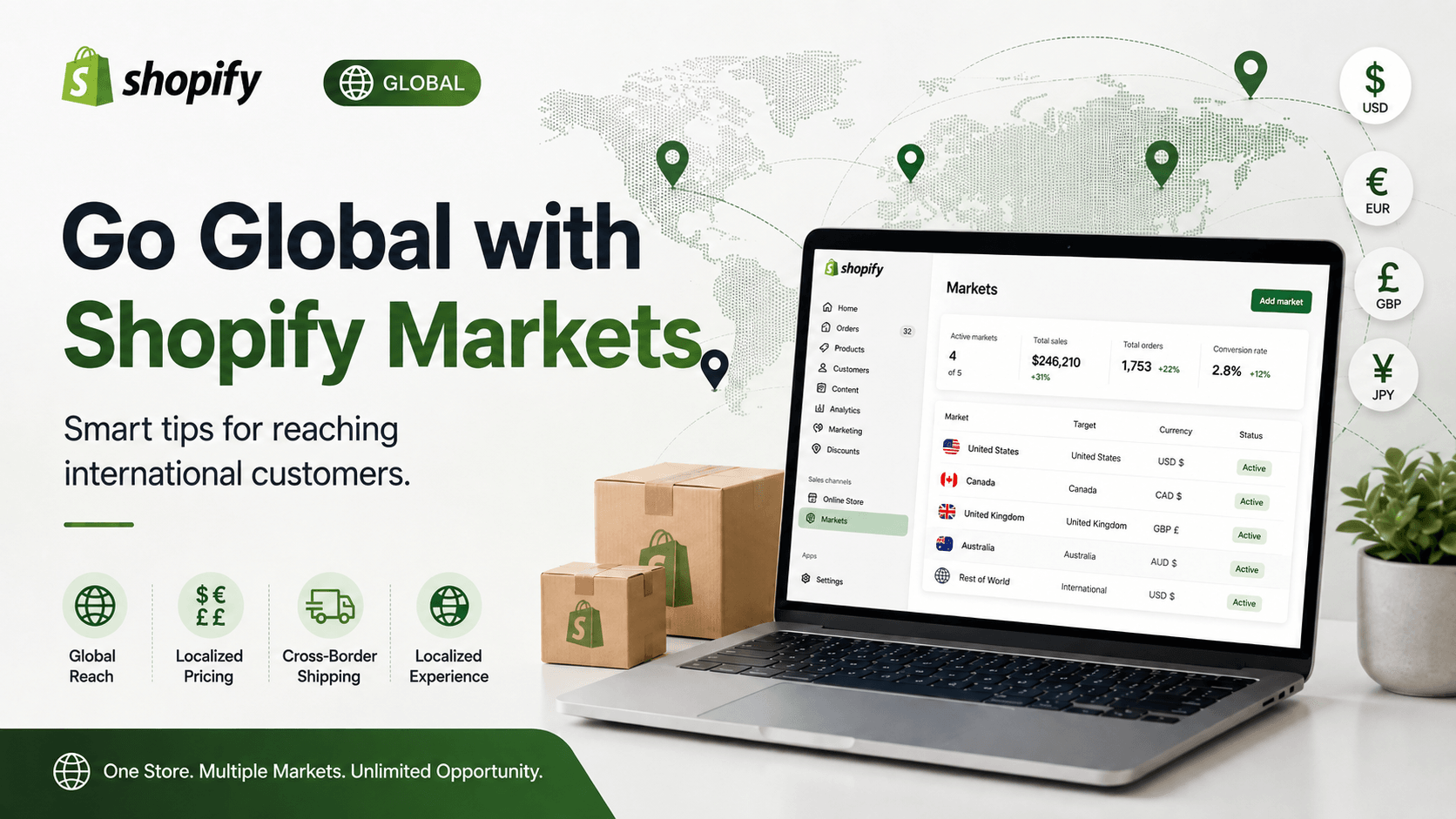
International selling on Shopify is powerful, but expansion fails when currency, shipping, and localization feel unfinished to overseas buyers. In 2026, Shopify Markets makes multi-country selling more accessible, yet strategy still matters more than simply enabling every country.
1. Launch fewer markets with stronger setup
Start with countries you can support on shipping, returns, and service. A polished market beats ten weak ones. Operational readiness should gate expansion decisions.
2. Show local currency and clear total cost expectations
Buyers trust stores that show prices they understand and communicate duties or shipping realities early. Surprise costs at checkout destroy conversion and brand trust across borders.
3. Choose domain strategy intentionally
Subfolders, subdomains, or country domains each have SEO and branding trade-offs. Pick a structure you can maintain with your content and analytics resources. Consistency matters more than chasing a theoretically perfect setup you cannot operate.
4. Localize key pages, not only translate words
Adapt homepage messaging, size guides, payment notes, and policy pages to local expectations. Thin auto-translation is easy to spot and can hurt both conversion and search quality.
5. Align catalogue and inventory with demand
Do not push products that are impractical to ship internationally. Highlight items with strong margins and reliable fulfillment. A smaller international catalogue that ships well often outperforms a full catalogue that creates delivery complaints.
6. Watch SEO for each market
Unique meta content, correct market setup, and localized landing pages help avoid duplicate-content confusion across regions. Track impressions and conversions by market so you know where localization investment pays off.
7. Prepare support and returns for cross-border reality
Make return windows, warranty expectations, and support channels clear for each market. International growth stalls when post-purchase experience feels unreliable.
8. Expand with measurement, not optimism alone
Review contribution margin after shipping, payment fees, returns, and support cost. International revenue that destroys margin is not a win. Use data to decide which market deserves the next localization sprint.
XLOXI helps brands plan Shopify international setups that balance growth opportunity with operational reality and search visibility in 2026.
Marketing and trust for international Shopify growth
Local payment preferences, delivery promises, and customer support hours shape trust as much as translated product titles. If you sell into a market, make sure post-purchase communication is understandable and that customers know how to get help. Chargebacks and returns climb when expectations are unclear.
Test your top landing pages with people who know the market. They will catch awkward phrasing, missing size standards, and cultural mismatches automated translation misses. Small localization fixes often improve conversion more than broad advertising spend.
Keep finance and operations involved early. Currency conversion, tax handling, and cross-border shipping constraints should shape which Markets you enable in 2026, not only marketing ambition.
A disciplined expansion plan protects margin while you grow internationally on Shopify. Validate contribution margin by market before increasing ad spend into new countries, and only localize deeper once the first market proves operationally stable. That sequence keeps international growth profitable instead of chaotic for growing brands.