
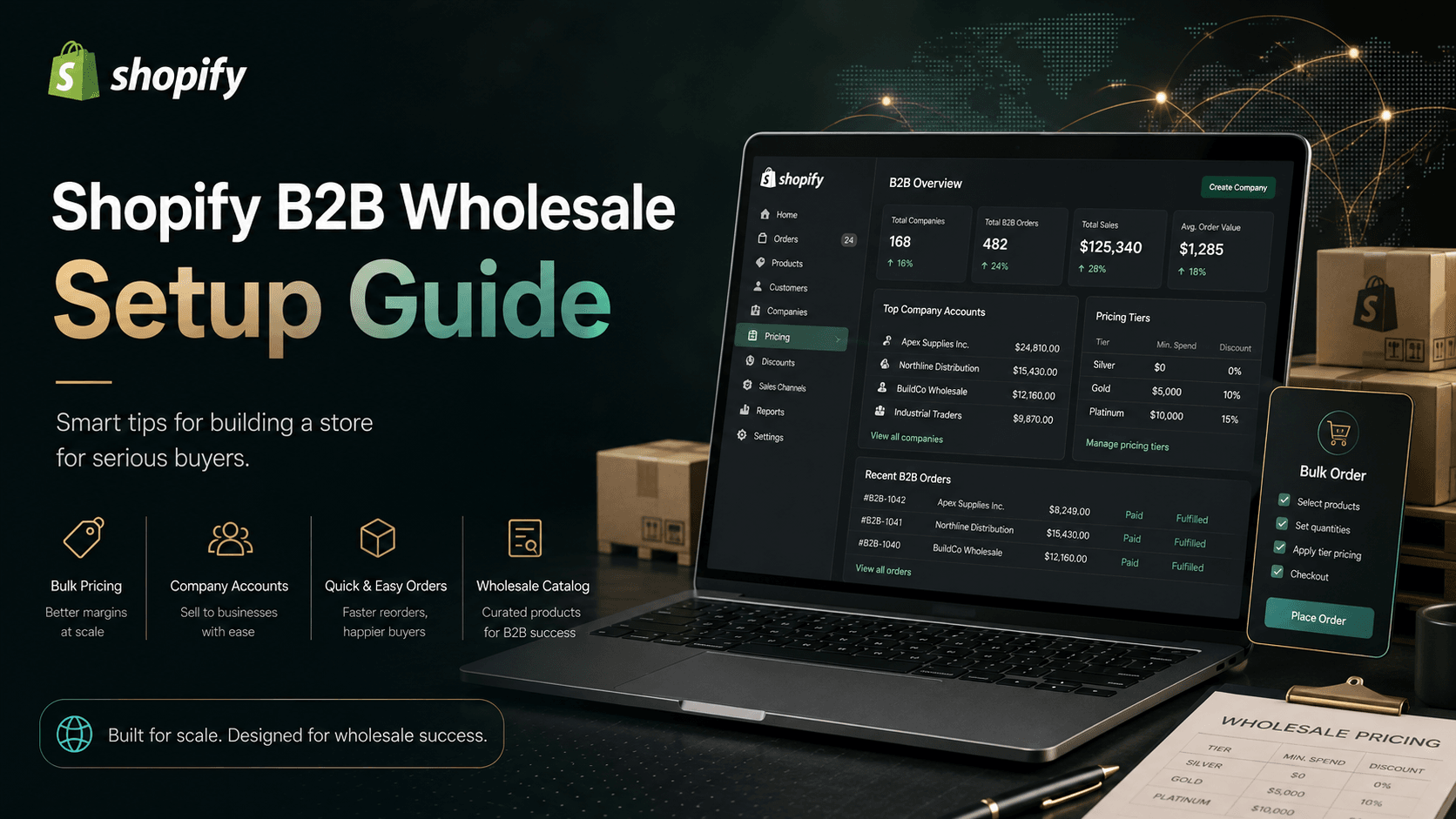
B2B Shopify stores need different UX than DTC shops. Wholesale buyers want clear catalogues, pricing rules, account approval, and fast reordering — not only flashy consumer marketing. In 2026, many wholesale brands use Shopify successfully when the storefront is designed around professional buying behavior.
1. Decide what logged-out visitors can see
Some brands show catalogue without prices. Others require login for everything. Choose based on how competitive your pricing is and how buyers discover you. Clarity beats cleverness: visitors should understand how to request access quickly.
2. Use a clean customer approval flow
Business registration should collect company details, tax IDs where needed, and buying role. Approval tools help keep wholesale access controlled. A slow or confusing approval process creates support work and lost deals.
3. Structure collections for professional buying
Organize by sector, product type, or use case. Business buyers should find categories quickly without consumer-style storytelling blocking the path. Strong taxonomy is one of the highest-leverage B2B UX investments.
4. Support quantity breaks and volume pricing
Wholesale often depends on tiered pricing. Make quantity rules obvious on product pages so buyers understand the benefit of larger orders. Hidden discount logic creates distrust and back-and-forth emails.
5. Make enquiry paths obvious
Not every B2B purchase is self-serve. WhatsApp, quote request, or account manager contact options can increase high-value deal flow. Place enquiry CTAs near complex products and bulk options.
6. Keep mobile usable for on-the-go buyers
Many wholesale customers browse between jobs or store visits. Fast mobile navigation and clear product data matter. Tables, filters, and account areas should remain usable on smaller screens.
7. Separate retail and wholesale experiences when needed
If you serve both audiences, avoid forcing one experience on both. Login-based pricing, separate menus, or distinct landing pages can prevent confusion and protect margin strategy.
8. Plan SEO and content for B2B intent
Wholesale buyers also search. Collection pages, brand pages, and educational content can attract business demand when written for commercial intent. Do not assume all B2B acquisition happens offline.
XLOXI builds Shopify B2B and wholesale experiences with custom Liquid, approval flows, and catalogue structures designed for business customers who need speed, clarity, and control.
Operational details that make B2B Shopify work
Define payment terms, minimum order values, and shipping rules before launch. Train support staff on approval workflows so buyers are not stuck waiting without updates. Add reorder-friendly features where possible, such as clear SKUs, downloadable catalogues, or saved carts, because repeat purchasing is the heart of wholesale revenue.
Measure B2B success differently from DTC. Track approval conversion, average order value by company, repeat order rate, and time-to-first-order after approval. Those metrics tell you whether the storefront is actually serving professional buyers.
In 2026, strong Shopify B2B stores combine clean UX with operational discipline. The theme can look excellent and still fail if pricing rules, approvals, and fulfilment communication are unclear.
XLOXI helps wholesale brands design buyer-first Shopify workflows for approvals, pricing visibility, and catalogue clarity so B2B stores can scale with less manual follow-up in 2026. When buyers can self-serve confidently, sales teams spend more time closing larger accounts instead of answering basic catalogue questions.